UK-wide · independent RF engineering WhatsApp: 07832 283547
RF Investigation Services Interference · Location · Diagnostics
GNSS Guard · UK-designed GPS jammer detectors

GPS Jammer Detector — know when your GPS is being jammed.

A UK-designed GPS jammer detector range: a handheld GPS jammer detector for quick checks, a fixed detector that sends an SMS alert when jamming starts, and a professional analyser that shows the effect on satellite reception.

PASSIVE DETECTION · GPS / GNSS · UK DESIGN & MANUFACTURE · AVAILABLE TO ORDER
The GNSS Guard range

JGD-100 · JGD-110 · JGD-120

Three GPS jammer detectors, from a simple warning to a full engineering view.

The range is deliberately split by application. You only pay for satellite analysis and remote communications when the job requires them.

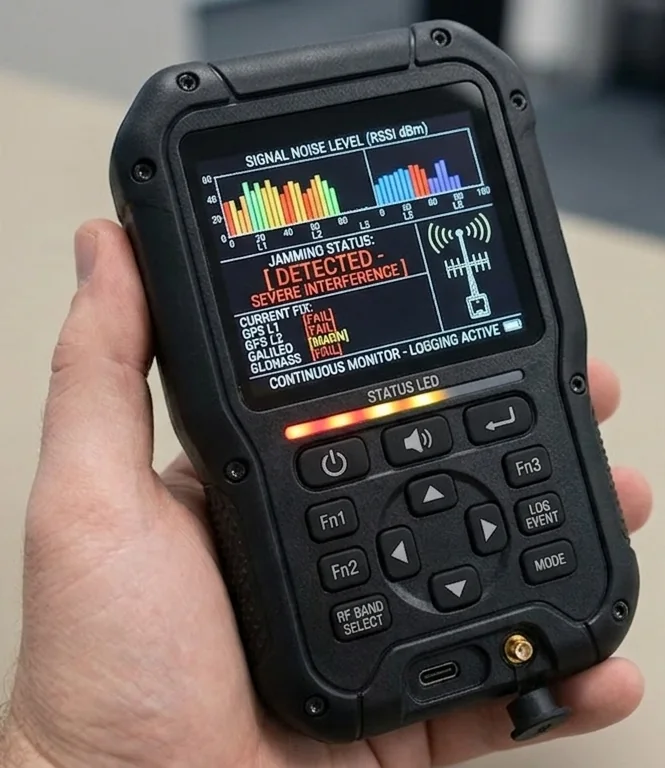
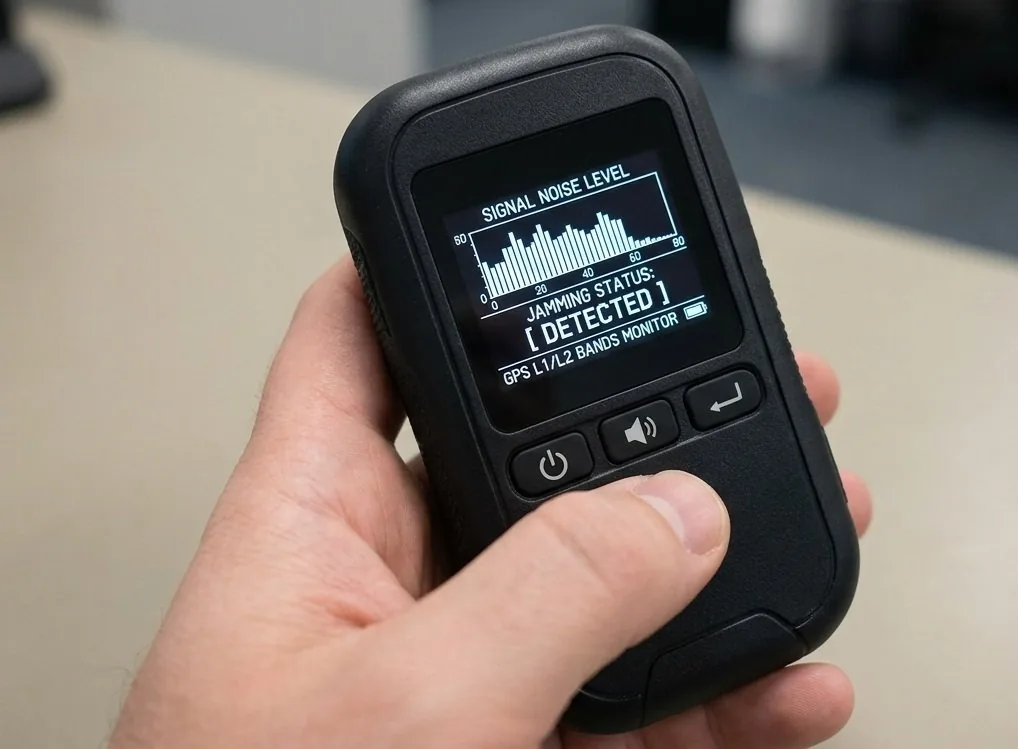
GNSS Guard portable GPS jammer and GNSS interference detector handheld unit
GNSS Guard · Model JGD-100

Handheld GPS Jammer Detector

A compact handheld instrument for quickly identifying abnormal RF energy in the GPS/GNSS L1 region.

£495 + VAT
  • GPS/GNSS L1 interference monitoring
  • Clear RF level / bargraph indication
  • Adjustable warning threshold
  • Audible and visual warning
  • Rechargeable portable operation
  • RTC / event logging option
Order now →
AVAILABLE TO ORDER · UK DESIGNED & BUILT
GNSS Guard Pro professional GPS and GNSS interference analyser with RF signal and satellite status display
GNSS Guard Pro

GPS Jammer Detector & GNSS Analyser

An engineering instrument intended to show both the RF interference environment and what is happening to GNSS reception.

£1,695 + VAT
  • Dedicated RF interference-level monitoring
  • Satellites visible / satellites used
  • GNSS C/N₀ signal-quality display
  • RF / receiver degradation correlation
  • Time-stamped event logging
  • Graphical trend display
  • USB data export
  • Survey and investigation use
Order now →
AVAILABLE TO ORDER · UK DESIGNED & BUILT
GPS jammer detector guide

What is a GPS jammer detector?

A GPS jammer detector is a radio-frequency monitoring instrument designed to identify abnormal interference in the frequency bands used by satellite-navigation receivers. In the UK, the phrase is commonly used for equipment intended to detect interference affecting GPS and, increasingly, the wider GNSS environment.

01 · DETECTION

Detect abnormal RF energy

A dedicated detector monitors the relevant GNSS band for RF energy inconsistent with normal satellite reception. This is different from relying only on a receiver reporting that it has lost position.

02 · CORRELATION

Separate jamming from GPS failure

Loss of position can also result from antenna faults, shielding, poor sky view or installation problems. Professional investigation therefore benefits from comparing RF activity with GNSS receiver health.

03 · EVIDENCE

Log when interference occurs

Time-stamped event logging can help fleet, plant, security and engineering users establish when abnormal interference occurred and compare it with vehicle, tracker or site events.

How does a GPS jammer detector work?

GPS satellites are very weak by the time their signal reaches the ground, which is why a cheap jammer can block them. A GPS jammer detector listens to the GPS band (L1, around 1575 MHz) and measures how much radio energy is there. Normal satellite signals sit below the background noise, so a sudden rise in energy in that band is a strong sign of a jammer nearby.

A basic GPS jammer detector simply warns when that level goes above a threshold. Better detectors also watch what the GPS receiver is doing — how many satellites it can see and how strong they are — so a real jamming event can be told apart from a blocked antenna or a poor sky view.

Choosing a GPS jammer detector

The correct instrument depends on the job. A handheld detector is useful for rapid checks and field investigation. A fixed detector is better when interference is intermittent and must be captured unattended. An engineering analyser is appropriate when the requirement is to understand both the RF environment and the effect on satellite reception.

For vehicle and fleet work, useful capabilities include clear signal-strength indication, event logging and portable operation. For depots, critical sites and remote assets, continuous monitoring and remote alerts can be more valuable than a handheld display. For technical investigations, RF level, GNSS C/N₀, satellites visible/used and trend logging provide much stronger diagnostic evidence.

GPS jamming detection vs jammer location

Detection answers the first question: is abnormal RF interference present? Location is a separate task. Finding the source may require directional measurements, comparative signal levels, movement around the affected area or a wider RF interference investigation. We therefore separate detector products from our on-site investigation service.

GPS jamming investigation service →

Typical GPS jammer detector applications

Common applications include fleet and vehicle tracking, plant and machinery protection, depots and logistics sites, security investigations, GNSS-dependent equipment, engineering surveys and locations where intermittent loss of GPS needs to be distinguished from an antenna or receiver fault.
Why the Pro / Remote approach matters

Loss of GPS does not automatically mean jamming.

A receiver can lose satellites because of shielding, antenna faults, multipath or poor sky view. GNSS Guard Remote and Pro are intended to compare abnormal RF energy with receiver health, helping distinguish an interference event from ordinary reception problems.

GNSS GUARD PRO MONITOR
Band GPS L1 / GALILEO E1
Satellites visible 18
Satellites used 11
Average C/N₀ 38 dB-Hz
RF interference LOW
STATUS · GNSS HEALTHY
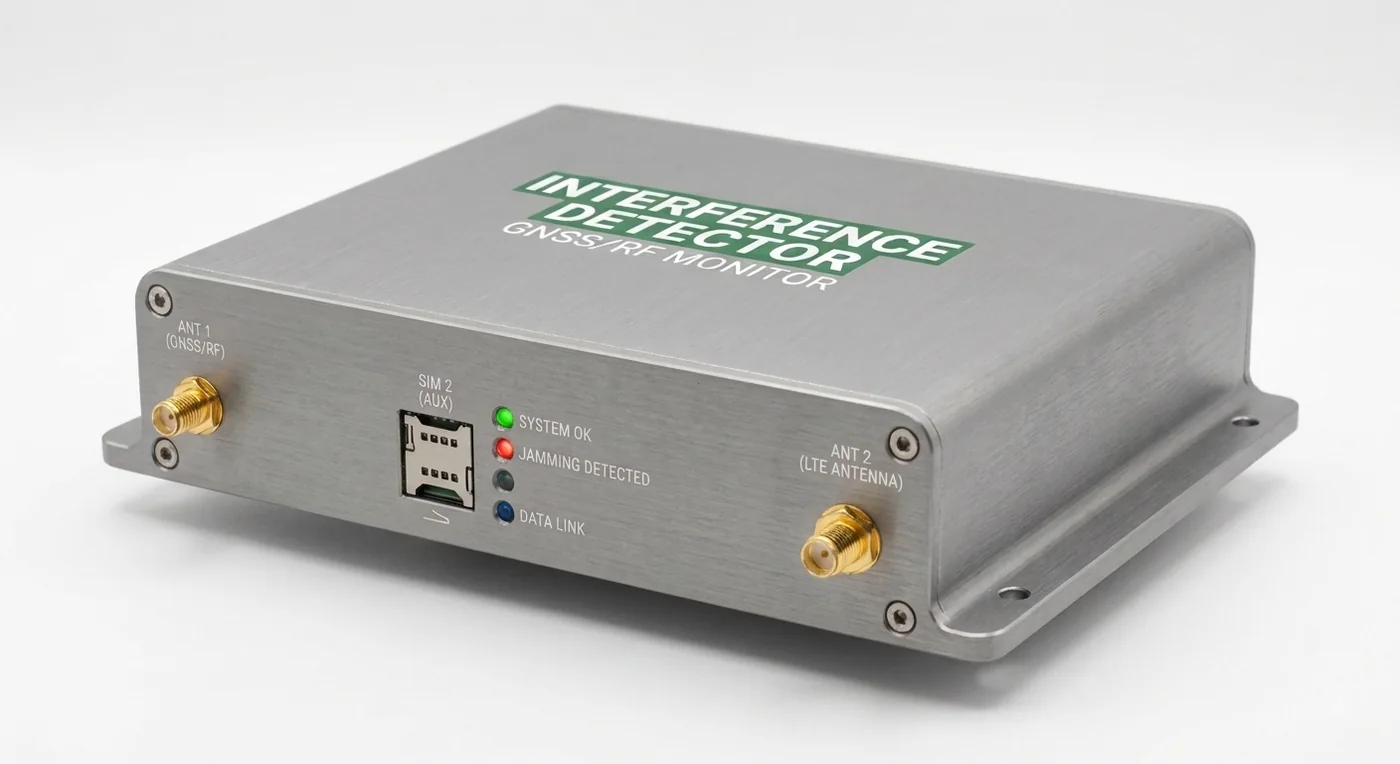
GNSS Guard Remote

A GPS jammer detector that watches when nobody else is.

Remote monitoring turns a local warning into an actionable event for a fleet manager, security team or engineer away from the site.

01 · MONITOR

Watch the GNSS band

Continuously monitor the relevant RF environment and GNSS receiver condition.

02 · CORRELATE

Check the effect on reception

Compare abnormal RF activity with satellite signal quality and receiver performance before escalating an event.

03 · ALERT

Send an SMS

Send a time-stamped warning to nominated personnel, followed by a restoration message when the event ends.

Applications

Who needs a GPS jammer detector?

Fleet & telematics

Investigate interference affecting vehicle tracking and positioning.

Logistics & depots

Monitor sites exposed to intermittent or passing GNSS interference.

Plant & assets

Remote warning where GNSS tracking forms part of asset protection.

Critical timing

Monitor the RF environment around GNSS-dependent timing systems.

Surveying

Investigate unexplained degradation during field operations.

RF investigation

Portable indication and logging for interference surveys.

Security operations

Identify abnormal GNSS-band RF activity in monitored locations.

Engineering & research

Observe receiver behaviour alongside interference measurements.

Passive and legal. GNSS Guard detectors are passive monitoring receivers. They only listen: they do not transmit or interfere with any radio service.
Questions

GPS jammer detector questions.

Can a GPS jammer detector prove that every GPS outage is jamming?

No. GPS reception can also fail because of antenna faults, shielding, poor sky view or installation problems. That is why the GNSS Guard Remote and Pro compare RF activity with what the receiver is actually doing, rather than treating every loss of position as jamming.

What is the difference between GPS jammer detection and location?

Detection establishes that abnormal interference is present. Locating the source is a separate job that may need directional or comparative RF measurements around the affected area. For that, see the GPS jamming investigation service.

Is it legal to use a GPS jammer detector in the UK?

Yes. A detector is a passive receiver: it only listens and does not transmit. It is using a GPS jammer that is illegal in the UK, under the Wireless Telegraphy Act 2006.

Who uses GPS jammer detectors?

Fleet and telematics operators, plant hire and construction firms, farms, depots and logistics sites, security teams, and anyone running GNSS-dependent timing or survey equipment. See also GPS jammers and farm machinery theft.

Will a GPS jammer detector also pick up mobile phone or Wi-Fi jammers?

Not on its own. The GNSS Guard range watches the satellite-navigation bands. For cellular and Wi-Fi bands, see the full jammer detection range.

How do I order a GPS jammer detector?

All three GNSS Guard models are available to order now: JGD-100 £495, JGD-110 £1,295 and JGD-120 £1,695, all plus VAT. Use the order form or WhatsApp 07832 283547 with the model and quantity.

Order a GPS jammer detector

Which GNSS monitoring problem do you need to solve?

Tell me whether you need the handheld detector, unattended SMS monitoring or the engineering analyser, and how many. Not sure which? Describe the job and I'll recommend one.