GPS jammer detector authority guide
What is a GPS jammer detector?
A GPS jammer detector is a radio-frequency monitoring instrument designed to identify abnormal interference in the frequency bands used by satellite-navigation receivers. In the UK, the phrase is commonly used for equipment intended to detect interference affecting GPS and, increasingly, the wider GNSS environment.
01 · DETECTIONDetect abnormal RF energy
A dedicated detector monitors the relevant GNSS band for RF energy inconsistent with normal satellite reception. This is different from relying only on a receiver reporting that it has lost position.
02 · CORRELATIONSeparate jamming from GPS failure
Loss of position can also result from antenna faults, shielding, poor sky view or installation problems. Professional investigation therefore benefits from comparing RF activity with GNSS receiver health.
03 · EVIDENCELog when interference occurs
Time-stamped event logging can help fleet, plant, security and engineering users establish when abnormal interference occurred and compare it with vehicle, tracker or site events.
Choosing a GPS jammer detector
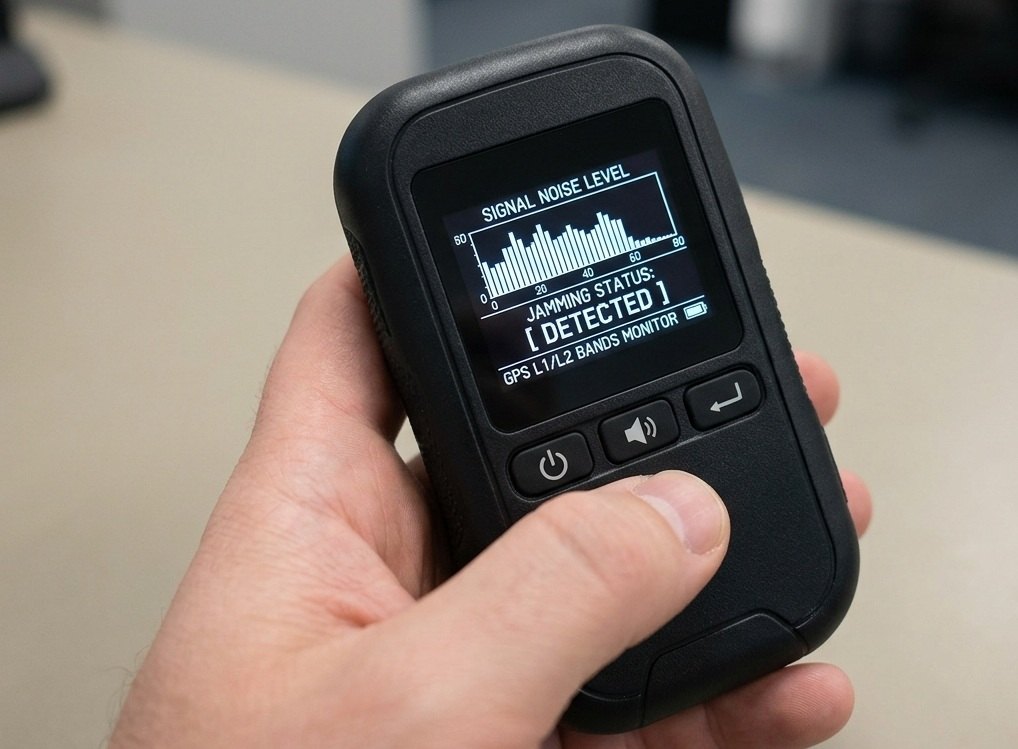
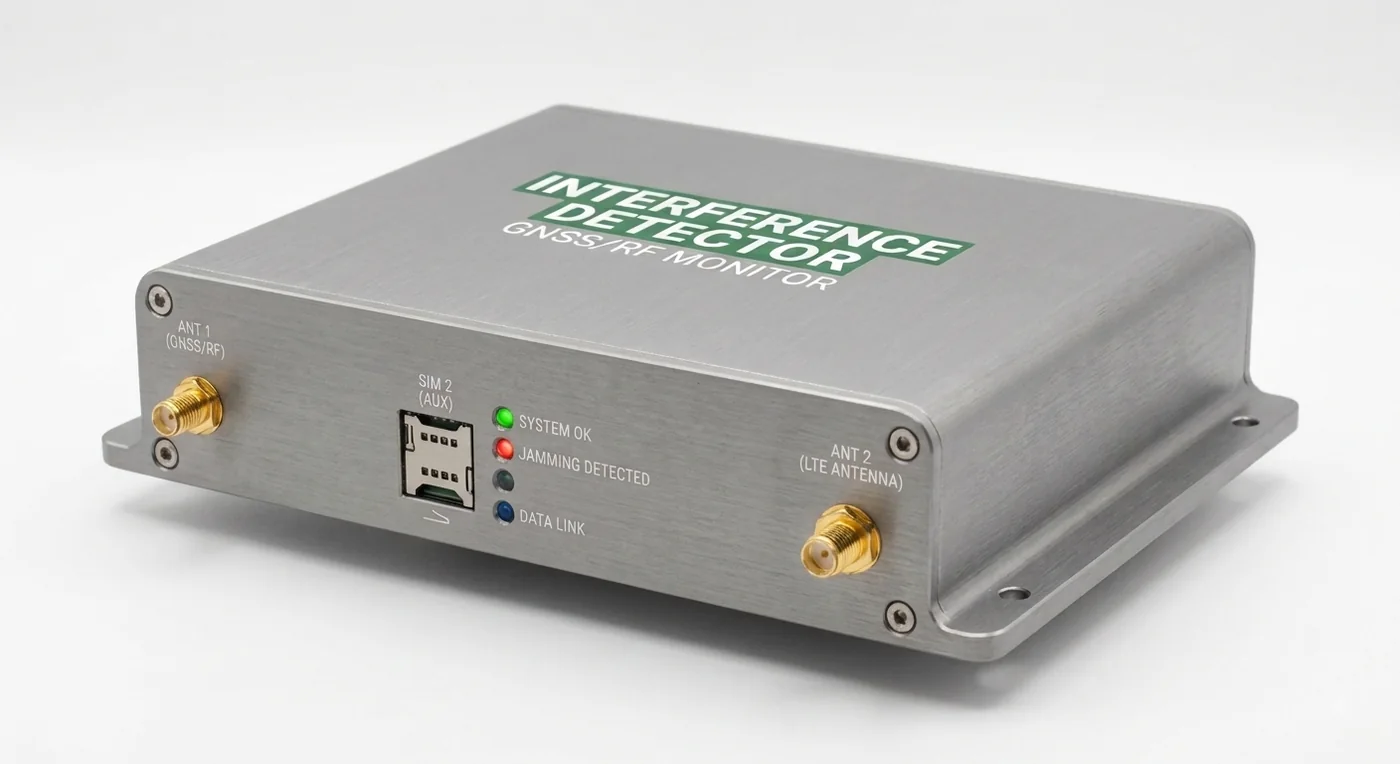
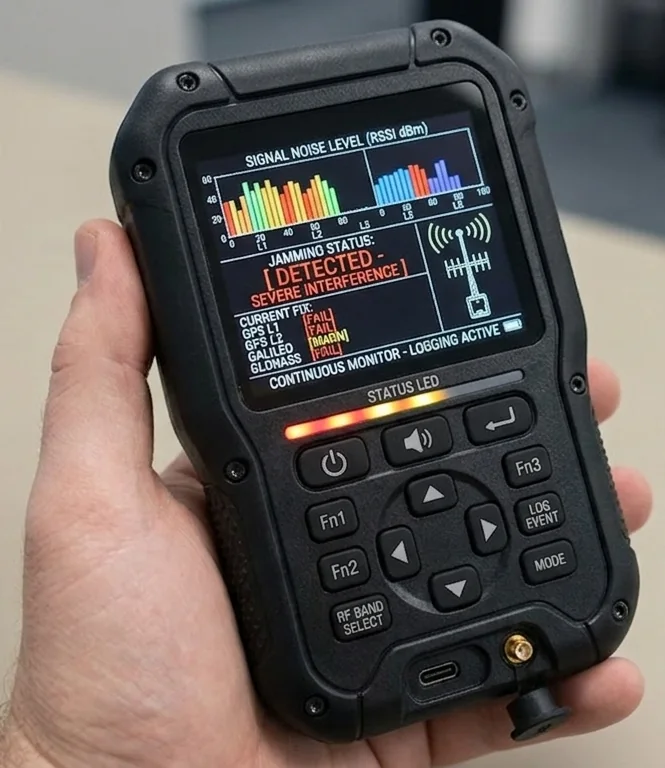
The correct instrument depends on the job. A handheld detector is useful for rapid checks and field investigation. A fixed detector is better when interference is intermittent and must be captured unattended. An engineering analyser is appropriate when the requirement is to understand both the RF environment and the effect on satellite reception.
For vehicle and fleet work, useful capabilities include clear signal-strength indication, event logging and portable operation. For depots, critical sites and remote assets, continuous monitoring and remote alerts can be more valuable than a handheld display. For technical investigations, RF level, GNSS C/N₀, satellites visible/used and trend logging provide much stronger diagnostic evidence.
GPS jamming detection vs jammer location
Detection answers the first question: is abnormal RF interference present? Location is a separate task. Finding the source may require directional measurements, comparative signal levels, movement around the affected area or a wider RF interference investigation. We therefore separate detector products from our on-site investigation service.
GPS jamming investigation service →
Typical GPS jammer detector applications
Common applications include fleet and vehicle tracking, plant and machinery protection, depots and logistics sites, security investigations, GNSS-dependent equipment, engineering surveys and locations where intermittent loss of GPS needs to be distinguished from an antenna or receiver fault.